Yoga Nidra, often translated as "yogic sleep," is one of the most profoundly restorative practices in the entire yoga tradition — and once someone experiences it, they rarely want to stop. Unlike most yoga styles that ask the body to move, strengthen, or stretch, Yoga Nidra invites the practitioner to lie completely still and travel inward through guided meditation and systematic relaxation. It occupies a unique threshold between wakefulness and sleep, a state that researchers and teachers alike describe as deeply healing. People come to it exhausted, anxious, or simply curious, and leave feeling as though they have slept for hours — refreshed, clear, and quietly transformed.
The roots of Yoga Nidra reach back to ancient tantric texts, but the practice was systematized and brought to the modern world largely through the work of Swami Satyananda Saraswati, a student of the revered Swami Sivananda. In the mid-twentieth century, Swami Satyananda developed a structured method based on ancient teachings from the Bihar School of Yoga in India, making the practice accessible and teachable across cultures. His framework drew on the concept of the pancha maya kosha — the five layers of the human being — guiding practitioners through each layer to reach the deepest levels of consciousness. More recently, teachers like Richard Miller have expanded Yoga Nidra into therapeutic settings through his iRest protocol, bringing the practice into hospitals, veteran rehabilitation programs, and trauma recovery spaces.
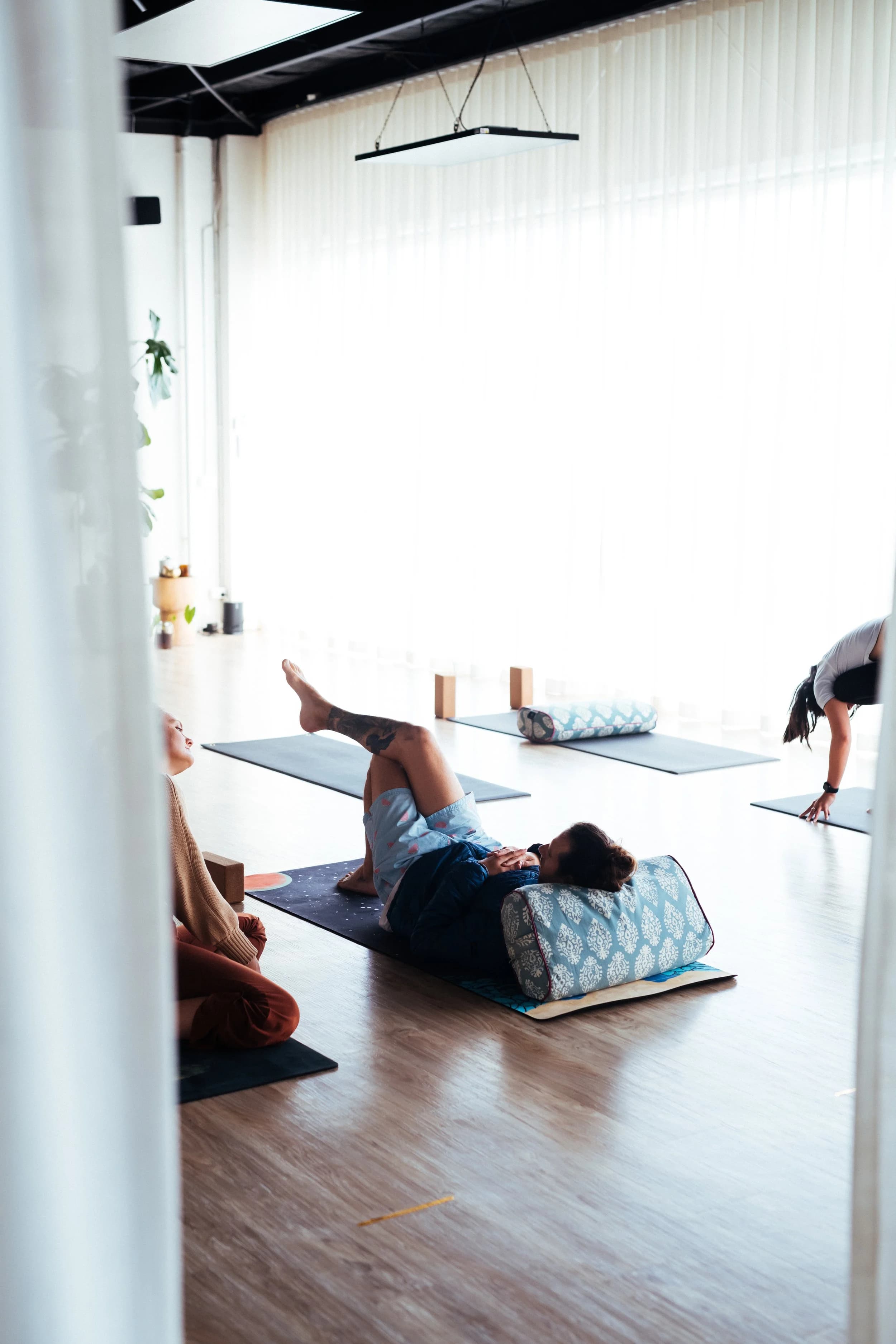
A typical Yoga Nidra session lasts between thirty and sixty minutes and requires nothing more than a comfortable place to lie down. The teacher's voice gently leads participants through a body scan, breath awareness, the use of a personal intention called a sankalpa, and a rotation through pairs of opposite sensations — hot and cold, heaviness and lightness, joy and sorrow — that help dissolve habitual mental tension. The benefits are wide-ranging and well-documented: reduced stress and anxiety, improved sleep quality, relief from chronic pain, emotional resilience, and a profound sense of inner spaciousness. Because the practice is entirely passive and adaptable, it is genuinely suitable for everyone — beginners, seniors, athletes, those recovering from injury, and anyone navigating burnout or grief. No prior yoga experience is necessary, and the body need not be flexible or strong. Yoga Nidra asks only one thing: the willingness to let go. For anyone ready to discover rest as a radical and transformative act, this ancient practice is waiting.











 WORKSHOP
 WORKSHOP