Bali Somatic Trauma Healing Center
Bali
Meditationwomen'shealing
9 studios offering trauma-sensitive yoga found near Ubud
FindYoga lists 9 trauma-sensitive yoga studios and class providers in Ubud. Browse timetables, compare styles and find the right trauma-sensitive yoga session for your level — whether you're stepping on the mat for the first time or deepening an established practice.
Bali
Bali
Bali
Bali

Bali

Bali

Bali
Bali

Bali
Trauma-sensitive yoga is a deeply compassionate approach to movement and breath that meets practitioners exactly where they are — not where a teacher thinks they should be. Rather than pushing toward perfect alignment or peak poses, this practice prioritizes safety, choice, and self-regulation above all else. It has become one of the most meaningful evolutions in modern yoga precisely because it acknowledges that the body holds memory, and that healing sometimes requires a gentler, more intentional form of entry. People are drawn to it because it offers something rare: a space where they are never asked to do anything that feels wrong, and where every moment of the practice belongs entirely to them.
The formal development of trauma-sensitive yoga is most closely associated with David Emerson, a yoga teacher and researcher at the Trauma Center in Brookline, Massachusetts, who collaborated with psychiatrist Dr. Bessel van der Kolk, the renowned author of The Body Keeps the Score. Together in the early 2000s, they began exploring how yoga could serve as a clinical adjunct for survivors of complex trauma, particularly those for whom traditional talk therapy had reached its limits. Their research gave rise to Trauma Center Trauma-Sensitive Yoga, or TCTSY, a rigorously studied methodology now recognized as an evidence-based complementary treatment for post-traumatic stress disorder. Unlike many wellness trends, this one was born in a clinical setting and tested with populations who had experienced profound adversity, lending it a credibility and depth that continues to shape how trauma-informed care is understood across many fields.
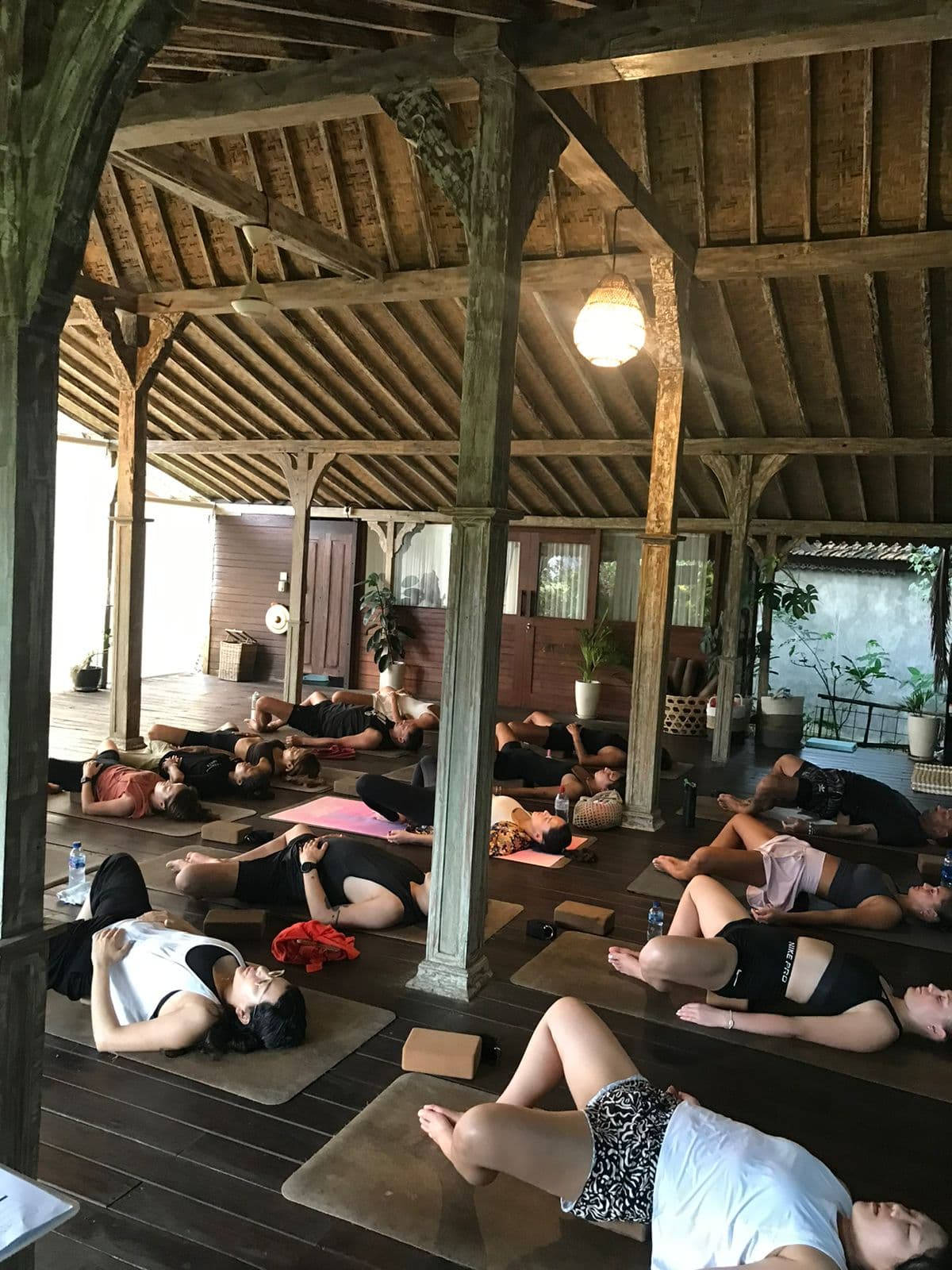
A typical session looks and feels quite different from a conventional yoga class. Language is invitational rather than instructional — a teacher might say "you might explore bringing your arms overhead" rather than "raise your arms now." Participants are encouraged to make choices throughout, adjusting, skipping, or modifying any shape without explanation or apology. Sessions generally move at a measured pace, incorporating gentle postures, breath awareness, and moments of stillness, with an emphasis on noticing internal sensation rather than achieving external form. There is no competition, no correction, and no expectation. This practice is particularly well suited for survivors of trauma, anxiety, PTSD, chronic stress, and anyone who has ever felt unsafe or unseen inside a yoga room. It is also a deeply nourishing option for caregivers, healthcare workers, and anyone navigating emotional exhaustion. For those who have wondered whether yoga could ever truly feel like a safe place, trauma-sensitive yoga answers with a quiet, unwavering yes.