
Yoga for Sleep: Create Your Bedtime Practice
1 April 2026
Quality sleep is one of the most powerful tools for health and wellness, yet millions struggle to fall asleep peacefully each night. If you find yourself tossing and turning, racing thoughts keeping you awake, or simply unable to relax before bed, a gentle yoga practice might be exactly what you need. Unlike vigorous exercise that energizes your body, a calming bedtime yoga routine signals to your nervous system that it's time to wind down and prepare for restorative sleep.

Why Yoga Enhances Sleep Quality
Yoga offers a unique combination of physical movement, breathing techniques, and mindfulness that directly addresses the root causes of insomnia and poor sleep. When you practice yoga before bed, you activate your parasympathetic nervous system—the part responsible for your body's relaxation response. This shift from your busy day to a state of calm is crucial for natural sleep onset. Additionally, gentle stretching releases physical tension stored in your muscles, while focused breathing lowers your heart rate and blood pressure.
Research shows that regular yoga practitioners experience improved sleep quality, faster sleep onset, and increased sleep duration. The practice also reduces anxiety and stress, two of the primary culprits behind sleepless nights. By dedicating just 15-30 minutes to a bedtime yoga routine, you create a powerful ritual that trains your body to recognize it's time for rest.
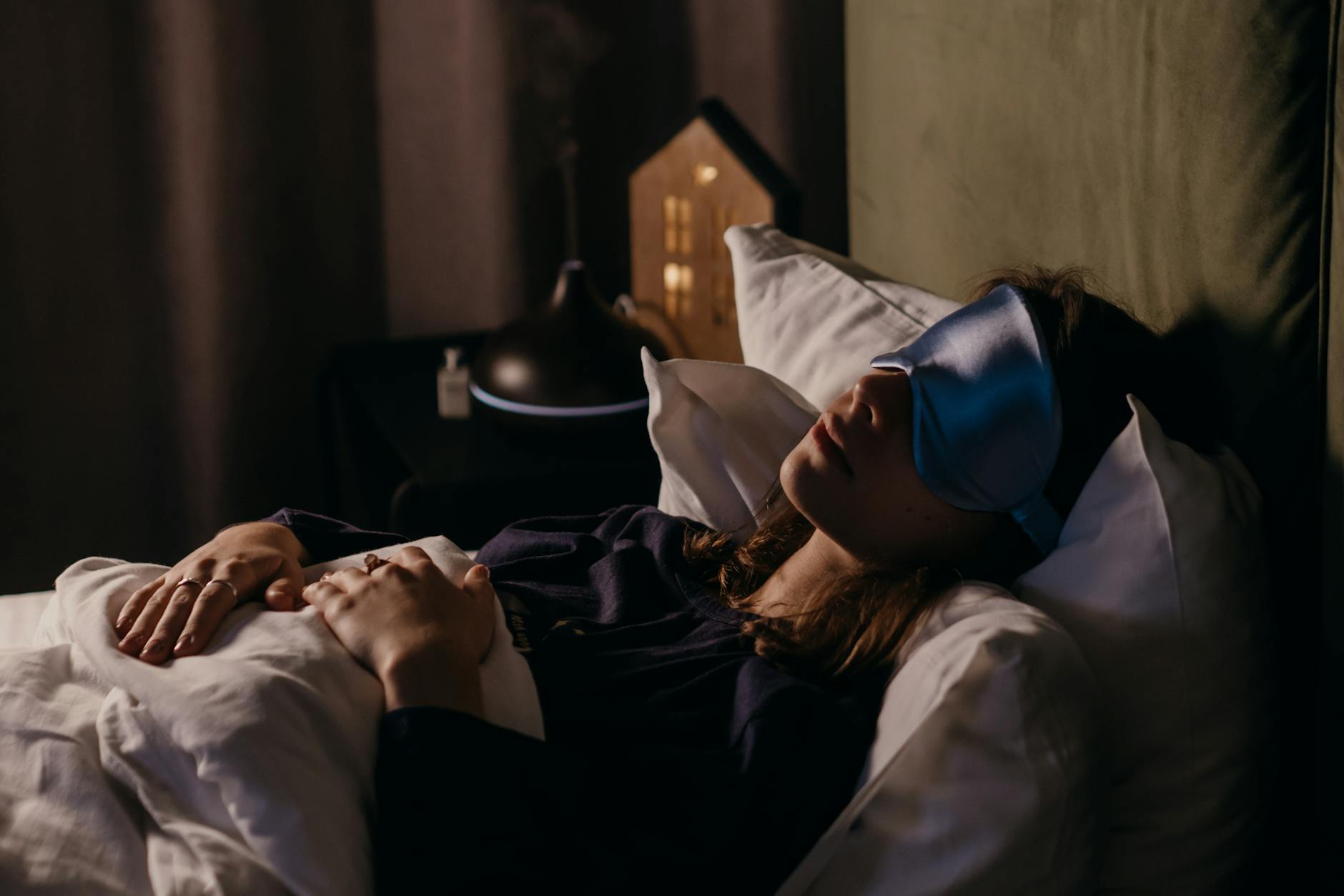
Building Your Bedtime Yoga Sequence
The key to an effective sleep yoga practice is keeping it gentle and restorative. Begin with Child's Pose, a calming forward fold that signals the beginning of your wind-down time. Follow with Cat-Cow stretches to gently mobilize your spine, then move into Downward Dog held for several long breaths. Transition to seated forward folds and reclined twists, which calm your digestive system and release spinal tension.
Next, practice Legs-Up-The-Wall pose or Reclined Butterfly pose while lying on your mat. These supported poses are particularly effective at calming your nervous system. Finish your sequence with Corpse Pose (Savasana), lying flat on your back with arms and legs extended, for at least five minutes. This final relaxation pose anchors all the benefits of your practice.

Breath Work and Meditation Tips
Incorporating pranayama (breathwork) amplifies your yoga practice's sleep benefits. Try the 4-7-8 technique: inhale for four counts, hold for seven, and exhale for eight. This breathing pattern activates relaxation responses in your body. Alternatively, practice equal breathing—inhaling and exhaling for the same count—to balance your nervous system.
During Savasana, add a body scan meditation by mentally relaxing each body part from your toes to your head. This technique keeps your mind focused and prevents racing thoughts that often prevent sleep.
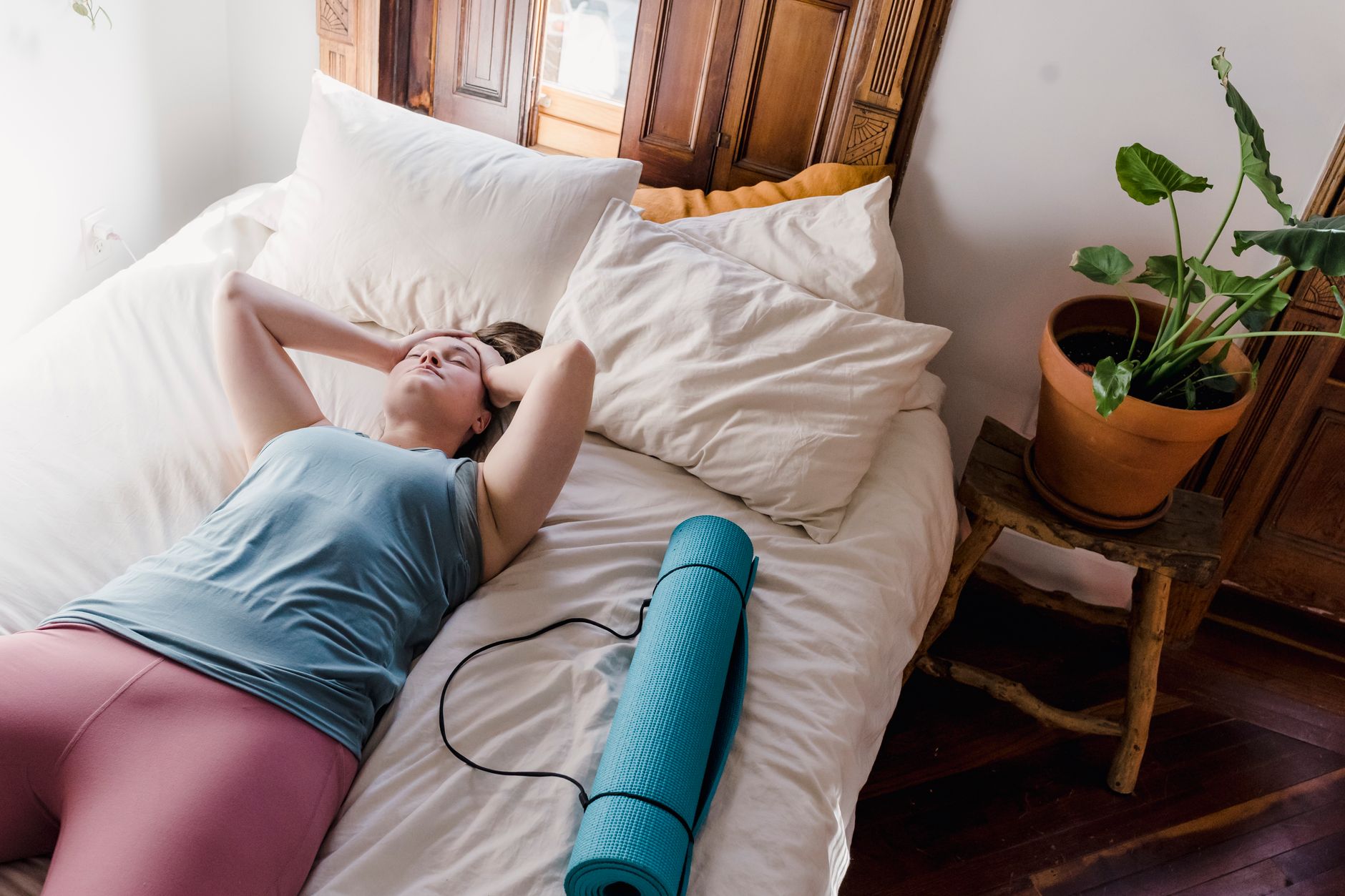
Creating Your Perfect Sleep Environment
To maximize your bedtime yoga practice, set up a dedicated space in your bedroom. Dim the lights, light a lavender-scented candle, and ensure your room temperature is cool and comfortable. Wear soft, loose-fitting clothing that won't restrict your movement. Consider practicing on your actual bed or a yoga mat placed beside it, so you can transition directly into sleep afterward.
Consistency is more important than intensity when building a sleep yoga habit. Practice your routine at the same time each night to help your body anticipate and prepare for rest.
By committing to a regular bedtime yoga practice, you're investing in your long-term health and wellbeing. Start tonight with just 15 minutes, and notice how this simple ritual transforms your sleep quality and overall quality of life.
```